
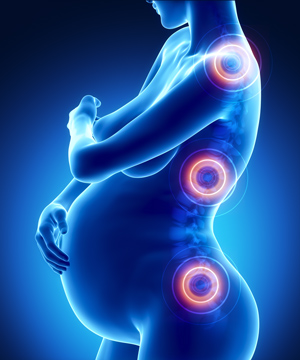
Back pain is a common complaint during pregnancy. Most women experience back pain at some point during pregnancy, usually in the later months, in addition to morning sickness, food cravings, and weight gain. However, there are a few things you can do to minimise your back pain and concentrate on the arrival of your baby.
Causes of Back Pain During Pregnancy
Back pain during pregnancy may be caused by a number of factors including hormonal changes, weight gain, spinal alignment and activity levels.
Hormonal changes in pregnancy can loosen the joints and ligaments making them softer and more elastic, in preparation for the birthing process. These changes affect the spinal stability and natural back support mechanism, especially as the weight of the baby increases.
Your center of gravity shifts as the baby grows, which causes your posture to change. The abdominal muscles become stretched and may weaken, causing back pain. This can lead to a noticeable "sway-back" appearance causing back pain. The pressure on the sciatic nerve or on a spinal disc can also cause radiating pain through the hips, buttocks, and legs.
Prevention of Back pain During Pregnancy
Listed below are preventive measures you can implement to help reduce the occurrence of back pain during pregnancy:
- Maintain a reasonable amount of activity and include exercises to strengthen your back and abdomen as recommended by your physician or physical therapist.
- If prolonged sitting is required, take frequent breaks to stretch the legs and back.
- Practice good posture to reduce the strain in the lower back. This can be done by standing as straight as possible, keeping the shoulders back and relaxed. If possible, in sitting position keep the feet slightly elevated. Choose a chair with good back support or use a small pillow for support and change the position frequently.
- To pick up things, you should squat down using your knees and keep the back straight. Avoid positions that require twisting and bending movements and also any activities that are painful.
- Avoid wearing high-heeled shoes and instead wear shoes with low heels and good arch support.
- Wear a support belt under your lower abdomen, later in your pregnancy.
- Get a sufficient amount of sleep. Practice relaxation techniques to keep your stress level down. Sleep on one side of the body rather than on the back with the knees bent. If needed, place a pillow around the abdomen for extra support and between the knees to keep the spine aligned.
Treatment for Back Pain During Pregnancy
If you are pregnant and experiencing back pain, consult your doctor and discuss the options of physiotherapy and massage therapy for control of the pain. You may also consult a physicotherapist without a referral.
Our physiotherapists and massage therapists are eminently skilled and experienced in treating pregnancy-related back pain. Commonly recommended therapies for managing pregnancy-related back pain include hot or cold therapy, a warm bath, hot bags, or an ice pack.
As the pregnancy progresses, a specifically designed physiotherapy program may be recommended to manage the discomfort at various stages of pregnancy. Specific pelvic–floor and lower back exercises may also be prescribed to reduce the pain and improve strength. If required, analgesic medications may be recommended by your physician.
Massage therapy can help relieve the discomfort of pregnancy-related back pain and also help with stress, tension, and pregnancy-related anxieties to provide comfort to the expecting mother.
Call your doctor right away if you experience a dull, cramping lower back pain, which can be a sign of preterm labor. Also, call your doctor If severe or sudden back pain occurs along with fever or vaginal spotting or bleeding.
Any numbness or weakness in the legs, buttocks, groin, and genital area also requires your doctor’s immediate attention.
Our therapists are highly skilled and experienced in treating musculoskeletal pain during pregnancy. A thorough assessment will be performed to determine the best treatment plan that may include massage therapy, special exercises, posture instruction, stretches, and other pain-relieving techniques.